
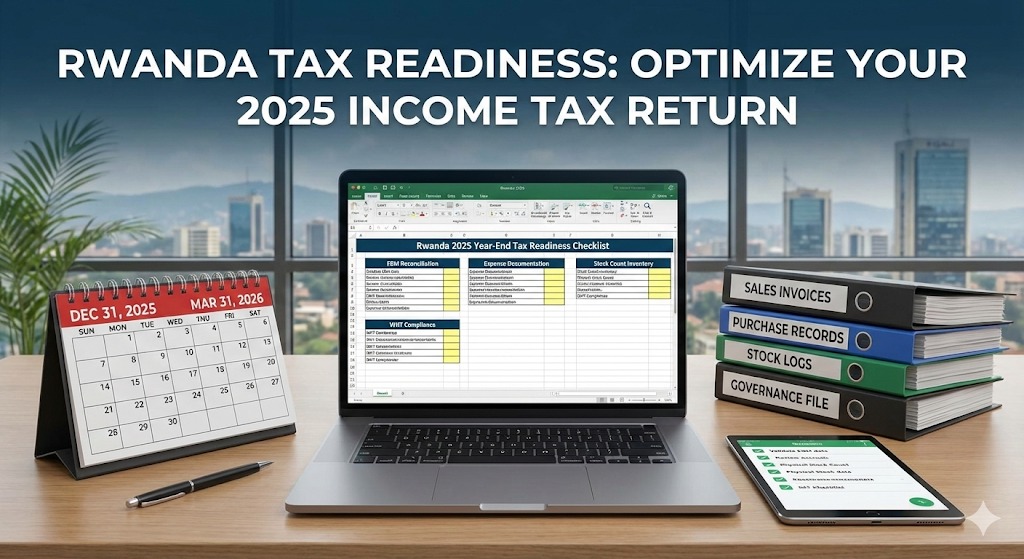
As the year closes, the best way to achieve an optimal 2025 income tax position is not “aggressive planning”, it is disciplined documentation, clean transactional data (especially EBM/e-invoicing), and strong stock controls. In Rwanda’s self-assessment environment, year-end readiness also reduces audit risk and prevents avoidable penalties.
Note on deadlines: the annual income tax declaration is generally due within three months after the end of the tax period, for calendar-year taxpayers, that is 31 March of the following year. This is why 2025 income tax is due on 31 March 2026.
1) Sales Management:
a) Ensure every sale is supported by EBM
All-registered taxpayers are obliged to use EBM to issue tax invoices/receipts for sales transactions. Missing or incorrect EBM data creates exposure in both VAT and income tax.
b) Reconcile sales across systems before year-end.
Perform a three-way reconciliation: EBM back office reports ↔ accounting ledger ↔ bank/mobile money statements. Investigate gaps (cancellations, returns, discounts, credit notes, timing differences).
c) Review credit sales and receivables.
Validate customer balances, confirm collectability, and document approved credit notes/returns. Where provisions are taken, ensure they are supported by a clear policy and evidence (aging, follow-up history, dispute files).
2) Purchases and Expenses:
a) Only claim expenses that are “wholly and exclusively” for business and properly supported.
Rwanda’s income tax especially on expense deductions articles expects expenses to be business-related, not capital in nature, and supported by appropriate documentation such as EBM invoices, Contracts, Payment proofs etc.
b) Accruals and cut-off testing (do this before closing).
Capture December supplier invoices received late, accrued expenses, and goods received not invoiced. Conversely, remove costs booked in 2025 that relate to 2026. Clean cut-off is one of the fastest ways to avoid overstating tax.
c) Withholding tax (WHT) discipline.
Where payments were made to non-registered persons during December 2025, WHT of 15% applies. Ensure it is withheld, declared, and paid not later than 15th January 2026, and that certificates/records are retained for credit/offset support where applicable
3) Stock Management: Protect Profit Accuracy Through Strong Inventory Controls
Inventory is often the largest driver of taxable profit. Weak stock controls can inflate profit (and tax) or create audit adjustments.
a) Conduct and document a year-end stock count.
Plan a controlled physical count as close as possible to 31 December 2025, with signed count sheets, independent review, and clear cut-off rules for goods in transit.
b) Reconcile stock records to the general ledger.
Reconcile: stock cards/ERP ↔ warehouse records ↔ financial statements. Resolve variances with documented investigations and approvals.
c) Identify slow-moving, obsolete, expired, and damaged stock.
Prepare an aging analysis and document any write-downs with evidence (damage reports, expiry logs, management approval, disposal process). A well-documented stock impairment approach is far more defensible than a late, unsupported year-end adjustment.
4) Governance and Record Keeping: Build a “Tax-Ready” File
a) Maintain books and records for the required retention period.
Rwanda’s Tax Procedures Law emphasizes robust record keeping, of at least ten years period
A Practical Year-End Checklist (Do This Before 31 December 2025)
- Finalize sales reconciliation (EBM vs ledger vs bank).
- Validate customer balances, credit notes, and returns approvals.
- Review supplier invoices, accruals, and expense cut-off.
- Confirm WHT compliance and supporting documents.
- Execute physical stock count, reconcile variances, document write-downs.
- Compile a tax audit file: contracts, invoices, payment proofs, payroll summaries, asset register, and reconciliations.